
The History About Hjarbæk
Hjarbæk is an active and vibrant local community where various events, spontaneous initiatives, and local associations and guilds bring life to the town, especially at the harbour.
The first part of the town’s name, Hjarbæk, comes from the word “hiord,” which means a herd of animals, and the second syllable refers to the stream that runs through the town. Up until the 1970s, one could still see a local farmer driving his cows (hiord) through the town and home for milking on the farm.
The Drying Ground, which now is as a large lawn between the inn and the fjord, has traditionally been reserved for the fishermen for the drying and tarring their fishing nets, as well as to stack their poles (stejler). The Hjarbæk Residents’ Association tries to preserve a stack of poles as a reminder of one of the town’s old trades. The Drying Ground is one of the best-preserved in Denmark and it is still used for its original purpose. Today, it is a natural gathering place for residents and visitors.
The building that today houses Hjarbæk Inn functioned as a customs house from 1847 to 1867. During that time, there was an inn at “Kongsgården,” where travellers could also stable their horses in the adjoining stables. The pavilion in the inn’s garden was built in 2023 based on inspiration from the original one built in 1912, which had to be demolished in 2022 after having hosted many parties and events.
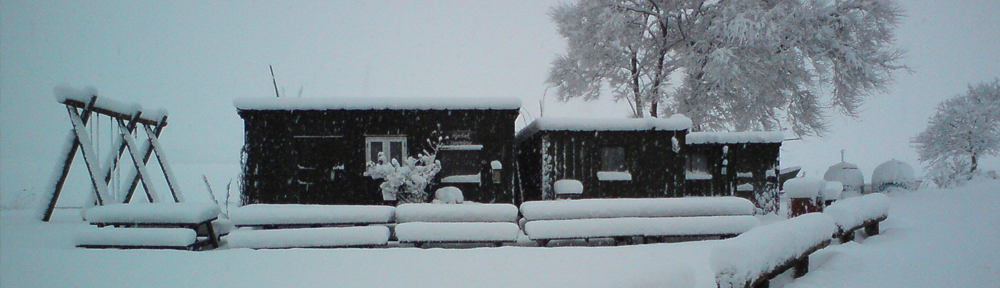
The town’s main industries were agriculture and fishing. There were 10-12 active farms in Hjarbæk and several smaller smallholdings with chickens and a single cow. Additionally, there were several active commercial and recreational fishermen who primarily caught salmon, eel, and herring. The green fishing sheds at the Drying Ground are privately owned and are, together with the stack of poles, a reminder of the bygone fishing environment.
The town also had – besides the inn, a grocery shop, a bakery,a smithy, a carpentry workshop, a laundry, and a dairy outlet. Some houses still bear traces of their former use.
South of the town, at the top of Svanevej, a large area is being subdivided for summer cottages. Many of the original summer cottages have been rebuilt/newly built, and new subdivisions have been added, so there is now also access to the area via Øregårdsvej.
The Virksund Dam was built in 1966 and cut Hjarbæk Fjord off from flowing freely with the rest of the Limfjord. This diluted the saltwater and filled the fjord with fresh brackish water. The purpose was to regulate the water level and thereby avoid flooding the meadows for the benefit of agriculture. However, Hjarbæk Fjord’s brackish water is now a paradise for the dance mosquito, and for many decades, Hjarbæk is synonymous with the mosquito plague: “Hjarbæk – isn’t that the place with the mosquitoes?”
Beach and camping guests found other places to enjoy themselves, house prices plummeted, and houses were for sale for several years. With the generation change in the 1970s, the younger generation moved to the town and began renovating the houses.
Despite the mosquito plague, there was good activity in the town. Many social events were held, even in the winter when the fjord was frozen and became a place for skating, iceboat world championships, and even motor racing. On summer evenings, the children gathered to play ball games and ‘Kick the Can’ at the three
corner in the middle of the town. The adults gathered naturally around boat restoration, herring fishing, or football at the Drying Ground.
1991 became a a landmark year as the sluice gates were opened, and the experiment with Hjarbæk Fjord as a regulated lake was abandoned for good. The dance mosquitoes disappeared immediately with the return of saltwater. The houses became attractive again, the caravan park flourished, and the municipality helped restore the beach to its former glory.
Now, development is accelerating, and the municipality is updating the strict local plan in an attempt to maintain Hjarbæk’s unique character. At the same time, an initiative with development plans is launched, meaning that all residentss have the opportunity to put forward suggestions for the town’s development. A large majority of the residentss believe thatthe Drying Ground is the most valuable area in the town. Therefore, today it stands with the green fishing sheds, the stack of poles, and access to the water as a unique and natural gathering place for the town’s activities.
The Løgstør Railway, which for a long time was only used for rail bikes, has been restored as a path for hikers and cyclists. It is now possible to travel safely from Viborg to Løgstør along the railway path and take a detour to Hjarbæk from the “stop” at Vordevej. The Hærvejsstien (path) also goes via Hjarbæk, allowing hikers to experience the town’s idyllic charm. The Heart Association has established a “Heart Path” that leads up over Bavnehøjen. From here, there is an almost 360-degree view over the fjord and fields, and on clear days, Viborg City Hall can also be seen.
New initiatives – Hærvejs hostel, pop-up gallery, shops, and wine import – are constantly being added contributing to, maintaining the town as a vibrant and attractive place to live and visit. Several children born and raised in the town have chosen to return and settle with their own families after completing their education. New subdivisions provide space for the town’s expansion. However, traffic increases with popularity, but there is no room for pavements, bike paths, or an expansion of the town’s access roads. Therefore, we ask you to be considerate and drive slowly when traveling on the roads.
Hjarbæk still has the most beautiful sunsets.
The timeline of Hjarbæk
- Historically, Hjarbæk was mentioned in 1085 when King Canute IV gathered a fleet of Viking ships in the fjord before an expedition to England.
- When the North Sea broke through Agger Spit in 1825, Hjarbæk was strengthened as a national and international port for many shiploads of various goods, such as potatoes and artificial fertilizers, which were transported to and from Viborg by road.
- The building that today houses Hjarbæk Inn functioned as a customs house from 1847 to 1867.
- In 1857, 116 national and 24 international ships called atHjarbæk.
- The Virksund Dam was built in 1966 and cut Hjarbæk Fjord off from flowing freely with the rest of the Limfjord.
- In 1977, the first Sjægt (clinker-built boat) World Championship was held.
- 1991 was a landmark year because the sluice gates were opened on20th April, and the experiment with Hjarbæk Fjord as a regulated lake was abandoned for good.
- The beautifully restored clinker-built boats (sjægt) can still be seen at the harbour, and the clinker-built tradition was included in UNESCO’s list of intangible cultural heritage in 2022.
- The viewing furniture from 2023 at the harbour and the play area by the stream, as well as the planned paths south and north of the town, provide ample opportunities for scenic experiences.